An Ordinary Day at the Museum
On an ordinary warm summer day in Berlin, I brought my kids to Dahlem to celebrate the opening of the new Sámi exhibition at the Museum Europäische Kulturen (MEK). A project done as a cooperation with several Sámi institutions and traditional handcraft artists, so called doudjar.
It was warm. I was sweating, and my traditional shawl started itching as one speech after the other kept underlining the amazing cooperation and thanking the same people over and over again. The other Sámi were sweating in their traditional gowns waiting for their turn to honour the place with joik and yet more speeches about how wonderful this cooperation has been and again telling us how amazing these same people were. How amazing this project by the MEK was.
It was getting uncomfortably warm, and the kids kept asking me when will the Sámi be on, when will they joik? It felt like the people talking from the podium had to convince me that this exhibition was at its essence a great project, over and over again. Trying to tell me that it was important for the Sámi culture. Underlining the promise that over 1000 objects would be returned. They would be returned at the end of the project. The next speech was about how the timeline of the project would now be extended.
It was getting sickeningly warm, and not just my kids got bored with how happy they all were with themselves. My kids just wanted to leave, and to be honest, so did I. I did look forward to visiting the exhibition, but it would not be during the opening day, that much was clear. We went a few days later, filled with anticipation, me, my partner and our two children.
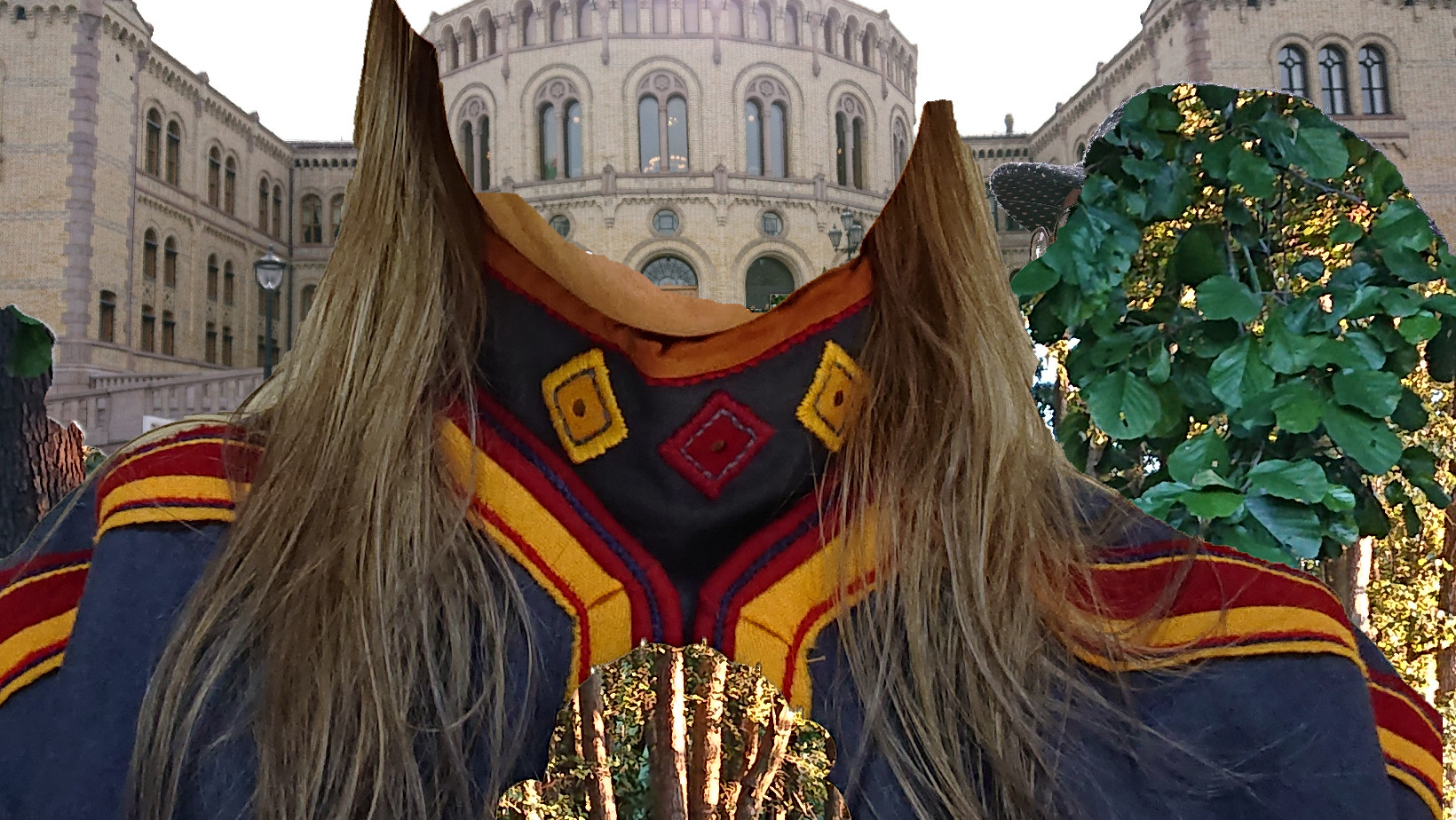
Before I let you in on the strange journey that we were about to commence, I must share my history with you. I was born by a boulder up in Sápmi, a land the Sámi have lived on since the ice started revealing the land. A nature people living of the land, making sure not to leave too many traces, with respect for those before us, and with love for those who would walk there after us. Later, this land we Sámi lived on was divided between the kings of Norway, Sweden, Finland and Russia. I grew up in the tradition of the sea tribe, with a few animals and living of that what the fjord and the earth had to offer. We were a community poor on money, but rich on humanity. Everyone helping and supporting each other in this small community, helping each other with the harvest, with raising the children, with everyday challenges. This is how we lived, despite the heavy assimilation we had been through. Suppressed by the Norwegian state, major society and by the Christian Læstadianism. Our language was not allowed in school, our joik was forbidden, it was shameful to be what I was, a Sámi. A culture of the past, not the future. I spent most of my life crawling out of this shame to take my culture back, to wear my gákti, to start to joik again. That said, we are still fighting for our human rights.
Back to August 2024 and the exhibition at MEK, all these thoughts did rush through my head before we went into that tiny room, stuffed with Sámi artifacts. I felt a slight tremble from deep within, something nudging my mind’s eye. Somehow drawn to it, I went over to a beautiful handmade sledge and started reading. My heart did not sink, it fell as I realised it belonged to the family of a person very dear to me. An elder who has been teaching me so much about our ways, our traditions, but most of all about the tradition of joik that so many have lost in my area. It is not possible for me to describe how it felt standing there reading the text, how they do not know in what way the object had been obtained. Just a dry sentence mentioning that it had been “gifted” to the museum. Another dry sentence about the fact that the family had been through a forced relocation as reindeerherders. Nothing in that text that could help the German visitor to understand what kind of a trauma that situation would be for an entire family. How families would be divided, how they would lose the connection to the land that had given them life for so long. How the joik had been connected to those lands and now the next generation would not learn to know those places, and also little by little the joik connected to them. A process cutting off the connection to the land on which the family had been living as nomads for as long as their storytelling goes back in time. And here was that sledge exhibited, not really letting us in on the dire tragedy the family had experienced.
Lightheaded I stumbled on, not really able to take it all in. Some beautiful redesigns of traditional garments. Many handcrafted tools with the most intricate artwork on it. And then the drums. As I arrived at that spot in the room, I spontaneously started crying. They were not supposed to be there. Magnificent powerful drums that should have been in Sápmi, not on a shelf in a museum in Germany.
Not to mention the sacrificial object stolen from sacred places.
My son, my 6 year old son, he came to me, took my hand and said: “Mum, I can’t breathe in this room. Can we please leave. I don’t like this.”
We left the room. We left the museum.
Now I cannot but wonder, are the days of the museum as we know it over? Is it not time to start presenting the cultures of the world with a deeper respect for the story of those who have been colonized? Should we not also start sharing the stories of how Indigenous people have managed to decolonize and Indigenize? Our culture survived, despite centuries of christening, colonisation and assimilation. That deserves respect.