
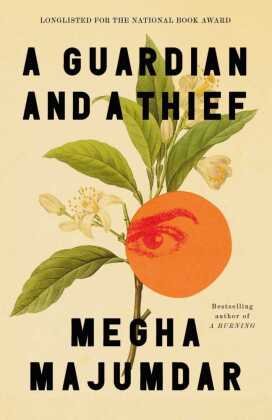
A Guardian and a Thief

Climate fiction deals with the effects of the climate crisis. If you are interested in this genre, you should be aware that the future scenarios depicted in these books are unlikely to have a happy ending – because that could only really happen with the end of the climate crisis, which is hard to imagine. Nevertheless, while reading Megha Majumdar’s latest novel, A Guardian and a Thief, I found myself hoping until the very end that at least the individual characters would be able to improve their personal circumstances: by fleeing India for the US on a climate visa, or by finding a protective roof over their heads and enough to eat.
The novel depicts a near future in which Kolkata is plagued by heat and food shortages. It follows the closely intertwined stories of Ma and Boomba and their respective families. Ma’s husband emigrated to the US some time ago as a researcher, and Ma, her elderly father, and her two-year-old daughter Mishti want to follow him as soon as they have gone through the complex and costly process of obtaining their climate visas. Ma has already quit her job as manager of an emergency shelter for families in need in order to prepare everything for their departure. At the beginning of the book, it says that they only have to survive one more week in Kolkata. Turns out, a lot can happen in one week.
Boomba comes from a poor, rural family. He has left his family behind in the Sundarbans to earn money in Kolkata to support his unemployed parents and baby brother. After a series of misfortunes, he ends up in Mas’s emergency shelter, and the two become bitter rivals, each accusing the other of being a thief. Majumdar depicts a society whose members, in the midst of an acute crisis, think only of themselves and quickly resort to drastic measures such as violence, extortion, or fraud in their struggle for survival.
So far, A Guardian and a Thief sounds like a story that has been told many times before. What sets this novel apart, is its sensitive treatment of different generations and social classes. Ma’s father is old and likes to reminisce, with a somewhat romanticized view, about the Kolkata of yesteryear, when fresh food was still available at the markets and people supported each other. He doesn’t tell Ma that he actually feels too old to start over in the US. Mishti is adorable: with her limited, creative vocabulary and childlike naivety, she brings lightness and joy to the novel, but her vulnerability and dependence also add an extra dose of worry. Ma’s family represents the middle class, members of which can sometimes find ways to cope with the crisis, whereas poor people like Boomba and his family seem completely at the mercy of circumstances. In stark contrast to this, a local millionaire, a marginal character, still enjoys pure abundance. The millionaire completes the picture of inequality. The novel shows that in a crisis, there are many people who do not have the opportunity to leave and, in some cases, do not even have the imagination to think about fleeing to another country. These nuances make A Guardian and a Thief an impressive and highly readable example of climate fiction.